
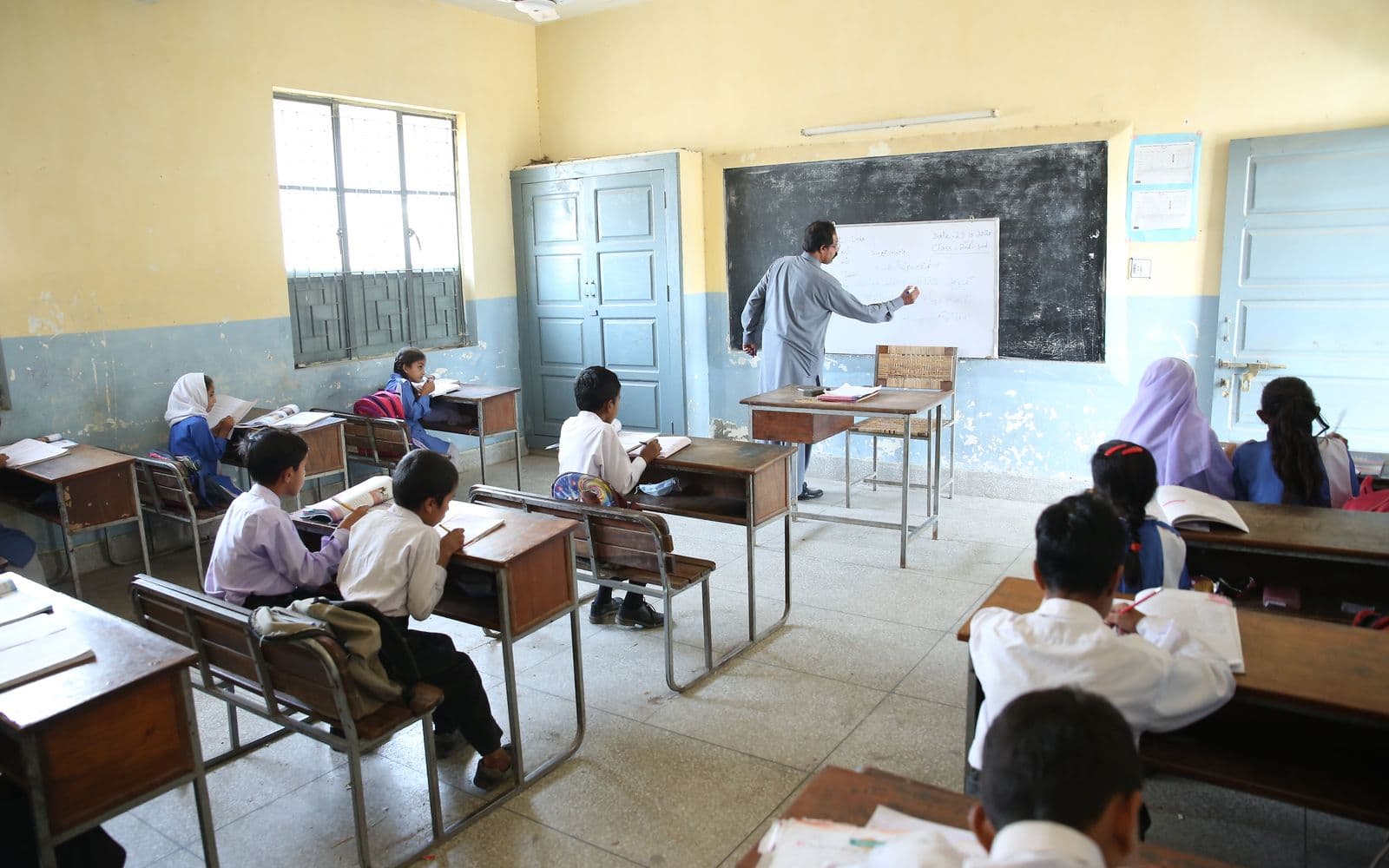
A school management system in Pakistan helps schools replace registers, fee books and handwritten report cards with one organised digital platform. Admissions, attendance, fees, exams, timetables and parent communication all live in one place, saving staff hours every week.
Pakistani schools face particular challenges: fee collection across many families, large class sizes, multiple campuses, parents who prefer Urdu, and frequent power or internet interruptions. This guide covers the features that matter most, the benefits for each group in the school community, and how to choose and roll out a system successfully.
What a School Management System Does
A school management system (sometimes called school ERP software) is a central database of students, staff, classes and finances. Each record is entered once and reused everywhere, so a new admission automatically appears in the class list, the fee schedule and the attendance register.
Instead of chasing paper files, principals and administrators can look up a student’s history, fee status or exam results in seconds. Teachers spend less time on clerical tasks and more time teaching.
The same platform works for very different institutions, from a single-campus primary school to a chain of schools across several cities, a college or a coaching academy. The difference lies in which modules are switched on and how the system is configured around each institution’s classes, sessions and fee rules.
Benefits of a School Management System for Every Stakeholder
A digital system is not just an office tool. Each group in the school community gains something different from it, which is why adoption tends to be strong once people see the results.
When everyone works from the same up-to-date records, there are fewer disputes about fees, attendance or marks, and decisions are based on facts rather than incomplete registers.
- Owners and principals: live view of enrolment, fee collection and staff attendance across campuses
- Administrators: faster admissions, automatic vouchers and fewer manual registers
- Teachers: quick attendance marking, online gradebooks and less paperwork at exam time
- Parents: timely updates on attendance, results, homework and dues
- Students: clear access to timetables, assignments and results
Key Features of a School Management System in Pakistan
Feature lists can be long, so focus on what solves your daily problems. A smaller school may only need admissions, fees and attendance at first, while a school chain will want consolidated reporting and parent apps from day one. Exam management deserves special attention: the system should calculate grades, positions and percentages according to your own rules and print report cards in your existing layout, so teachers are not forced to change familiar formats.
The most useful features for Pakistani schools include:
- Admissions and student profiles with guardian details and documents
- Fee management: fee structures, sibling discounts, bank-printable vouchers, fines and defaulter lists
- Daily attendance for students and staff, including biometric or card-based options
- Exams, grading and printable report cards in the school’s own format
- Timetables, class and section management, and teacher assignments
- Parent portal or mobile app with SMS or app notifications
- Multi-campus management with consolidated reports for owners
- Library, transport and inventory modules for larger institutions
Fee Management and Financial Control
Fee collection is often the biggest administrative burden in private schools. A good system generates monthly or quarterly fee vouchers automatically, applies discounts and scholarships, and records payments made at the bank, the school counter or through digital channels.
Defaulter reports help the accounts office follow up early, and automated reminders to parents reduce awkward conversations. Owners of multi-campus schools can see collection status for every branch in PKR at a glance, which makes cash-flow planning much easier.
Fee data also supports better decisions. Owners can see how admissions and collections change across sessions, which classes have the most defaulters and how discounts affect revenue. These insights help when planning fee revisions, scholarships or new campuses.
Keeping Parents Informed
Parents in Pakistan increasingly expect timely updates about their children. A parent app or portal can share attendance alerts, homework, exam results, fee reminders and school announcements without relying on printed circulars that may never reach home.
Language matters. Offering notifications and key screens in Urdu as well as English makes the system accessible to more families. SMS alerts remain useful for parents who do not use smartphone apps regularly.
Online fee payment links, digital vouchers and payment confirmations reduce the number of parents who need to visit the school office. For working parents, being able to check dues and results on a phone in the evening is a real convenience.
Two-way communication helps too. Parents can request meetings, apply for a child’s leave or ask about a fee voucher through the app, and the school has a record of every message. This is far easier to manage than scattered phone calls and WhatsApp groups that mix important notices with casual chat.
Cloud or On-Premises: Deployment Options for Schools
Cloud-based school software is accessible from any device with internet, which suits schools with several campuses or administrators who work remotely. Data is backed up off site, protecting records if a computer fails.
On-premises deployment keeps the system on a server inside the school. This can suit campuses with unreliable internet. Either way, plan for load-shedding with UPS backup for key machines, and ask the vendor how the system handles offline data entry.
Whichever option you choose, protecting student data is essential. Records include children’s personal details, family contacts and academic history, so access should be limited by role, passwords should be strong, and backups should be tested regularly rather than assumed to work.
How to Choose a School Management System in Pakistan
Start by listing your biggest pain points, whether that is fee collection, report cards or parent communication. Ask vendors to demonstrate those exact workflows using your school’s fee structure and report card format.
Check that the system can be customised to your grading scheme and board requirements, that data can be exported, and that student information is protected with role-based access. Make sure the vendor provides training for teachers and office staff, and support during busy periods such as admissions and exam season.
Timing matters as well. Many schools find it easiest to go live at the start of a new academic session, after entering student records and fee structures during the break. A short pilot with one campus or a few classes helps iron out issues before full rollout.
Cost depends on the number of students and campuses, modules, mobile apps, hosting and customisation. Tech Accuracy builds customisable school management systems for schools, colleges and academies, with training and ongoing support, and provides a quote based on your requirements.